Environmental ratings and sealing: making miniature RF connectors survive outdoors
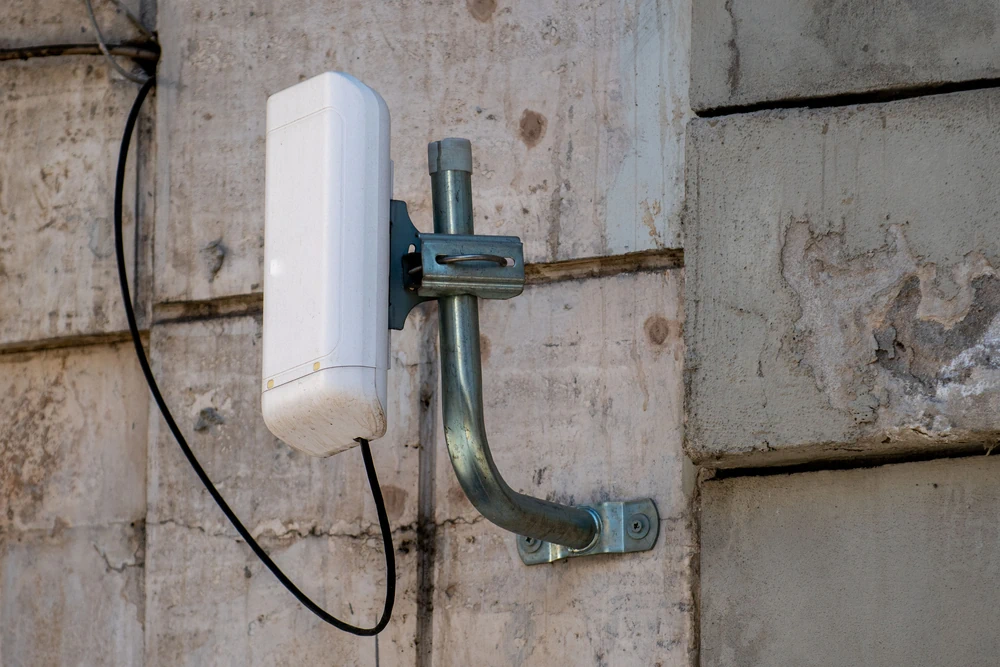
Here's a scenario that plays out more often than anyone in RF wants to admit: a perfectly good U.FL pigtail, soldered with care, tested indoors, performing beautifully at the bench. Then it goes into an outdoor enclosure on a rooftop, gets rained on twice, and three months later the return loss numbers look like garbage. What happened? Moisture crept somewhere it shouldn't have, oxidized a contact, and the whole thing quietly degraded without anyone noticing until the data started dropping out.
This is the fate waiting for most miniature RF connectors unless you plan around it. Antennas, drones, IoT gateways bolted to poles, sensor nodes buried in irrigation fields, they all rely on connectors that were, frankly, designed for tight PCB real estate rather than a hurricane. This piece walks through what actually threatens these parts outdoors, which ratings matter, how people seal them in the real world, and where the trade-offs bite. If you're speccing hardware for anything that lives outside a climate-controlled box, this is for you.
A quick refresher on the players
Green Button covers the usual suspects, so a fast recap: U.FL, IPEX, and MHF are the tiny board-mounted connectors found crammed inside phones, dongles, and access points. They're wonderful for saving space and terrible for repeated mating or weather exposure; a few dozen mate cycles and they start losing their grip. MMCX and MCX sit a notch up in size and ruggedness, snap-lock designs that survive more handling but still aren't inherently sealed against water. SMA, SMB, and SMP are the grown-ups of the family, threaded or push-on, larger bodies, and available in sealed or bulkhead variants that were actually built with the outdoors in mind. Worth remembering: mating cycle rating and environmental rating are two completely different specs, and a connector can be great at one while being useless at the other.
What the outdoors actually does to these parts
Water is the obvious villain, but it's sneakier than rain alone. Condensation forms inside enclosures after temperature swings, and that moisture doesn't need a downpour to find its way to a contact. Salt spray near coastlines accelerates corrosion on anything not stainless or well-plated. Dust and grit work into gaps and abrade plating over time.
Then there's thermal cycling, which sounds boring until you realize it's the thing that slowly pries seals apart as materials expand and contract at different rates. UV chews through rubber boots and overmolds, turning flexible polymers brittle within a couple of seasons. Add vibration from wind or vehicle mounting, and mechanical wear loosens what used to be a snug seal.
Occasionally you even get biological surprises, insects nesting in an open connector cavity, which nobody puts in a datasheet but happens constantly in the field.
The ratings and standards worth knowing
IP codes (IEC 60529) are the shorthand everyone reaches for. IP67 means dust-tight and survives temporary immersion; IP68 pushes that immersion further. But here's the catch: a bare miniature RF connector usually isn't IP-rated on its own. The rating typically applies to an assembly, cable gland, or the whole enclosure once everything is mated and sealed together. MIL-STD-810 covers broader environmental torture tests (temperature, humidity, shock), while MIL-STD-202 zeroes in on component-level electrical and environmental testing. For corrosion specifically, ASTM B117 salt fog testing tells you how a part behaves near the ocean or on a de-iced highway overpass. And don't confuse a manufacturer's mating cycle count with an environmental cycle count; one measures mechanical wear from plugging and unplugging, the other measures survival through weather extremes. They rarely align, and assuming otherwise is how designs fail in year two.
How people actually seal these things
The cleanest option is buying connectors or feedthroughs that were built sealed from the factory. Hermetic bulkhead feedthroughs and sealed SMA or SMB variants give you the most reliable protection, though you'll pay more and occasionally sacrifice a sliver of RF performance for the privilege.
O-rings and compression gaskets show up a lot on bulkhead-style connectors, sitting between the panel and the connector flange. Silicone handles a wide temperature range reasonably well; fluorosilicone resists fuels and chemicals better; EPDM is a solid all-rounder for weather but weak against petroleum products. Pick based on what your deployment will actually touch.
Overmolding and potting go further, encapsulating the whole junction in resin or heat-shrink material. It's about as close to bulletproof as you get, but repair means cutting the whole thing out and starting over, and heavy-handed potting can shift impedance if it's not done with RF geometry in mind.
For lower stakes situations, dust caps and adhesive-lined heat-shrink boots do a surprising amount of good for very little cost, especially on connectors that spend time unmated during storage or shipping. Silicone and polyurethane adhesives fill gaps and add flex tolerance, though stiffer epoxies can crack under thermal cycling if you're not careful. Conformal coatings protect board-level circuitry nicely but should stay well clear of the actual mating face, or you'll end up insulating the connection you were trying to protect. And don't overlook strain relief: water loves to wick along a cable's braid if there's no adhesive-lined shrink tube or molded boot stopping it at the entry point.
Design trade-offs nobody mentions in the marketing copy
Sealing isn't free. O-rings add mating friction and wear faster than you'd expect if the connector sees frequent servicing. Potting kills repairability outright. Adhesives that are too rigid crack under repeated thermal flex, so flexibility sometimes beats raw strength. Material choice matters for corrosion too; stainless bodies and gold-plated contacts resist oxidation far better than base metals, which matters enormously in coastal or humid climates. Wherever feasible, push the connector itself inside an IP-rated enclosure with a sealed bulkhead pass-through rather than relying purely on a sealed connector sitting out in the open; it's a belt-and-suspenders approach that pays off. And keep an eye on EMI: some sealing methods alter shielding continuity, so bulkhead feedthroughs generally protect RF integrity better than an improvised potting job.
Testing before you trust it
A sane test plan starts with basic IP verification (spray or immersion depending on target rating), then moves into salt fog, thermal cycling, and vibration. Crucially, measure RF performance before and after each stress test: insertion loss, return loss, isolation. A connector that passes an environmental chamber test but shows a spike in VSWR afterward has failed just as surely as one that leaked water.
Run mating cycle tests under the same environmental stress rather than treating them as separate boxes to check. And document your failure criteria upfront, corrosion visible under magnification, loss of continuity, degraded shielding, so a "pass" actually means something repeatable.
Keeping things alive in the field
Spare dust caps cost almost nothing and should go on any unmated connector immediately, no exceptions. Clean contacts with isopropyl alcohol and lint-free swabs; avoid harsh solvents that eat into seal materials. When a boot or overmold degrades, decide early if resealing makes sense or if the whole cable assembly needs replacing, because half-measures on aging seals tend to fail again within a season.
Buying pre-sealed assemblies from a vendor who can hand you test reports beats rolling your own unless you've got the lab time to validate it properly. And simple installation habits help more than people expect: orient connectors downward or sideways to avoid pooling, add drip loops in the cable run, and secure cables so they're not flexing against the connector body every time the wind picks up.
Quick checklist for designers
- Match connector family to expected mating cycles and service life, not just size constraints
- Favor sealed variants or bulkhead feedthroughs for anything outdoor
- Specify materials plus IP or MIL test requirements before you order parts
- Plan strain relief and cable routing to stop water wicking along the braid
- Verify RF performance both before and after environmental stress testing
Where to go from here
Outdoor deployment rewards planning and punishes shortcuts. The right connector family, a sealing method matched to your actual conditions, and a test plan that checks RF performance alongside water resistance will save you from a slow, invisible failure months down the line. Cost, repairability, and RF performance will always pull against each other a bit, and that's fine - just go in knowing which one you're willing to bend on.
If you're wrestling with a specific outdoor setup, browse the connector guides here on Green Button, or drop us your deployment scenario. We've probably seen a version of it fail before, and we're happy to save you the trouble of finding out the hard way.